
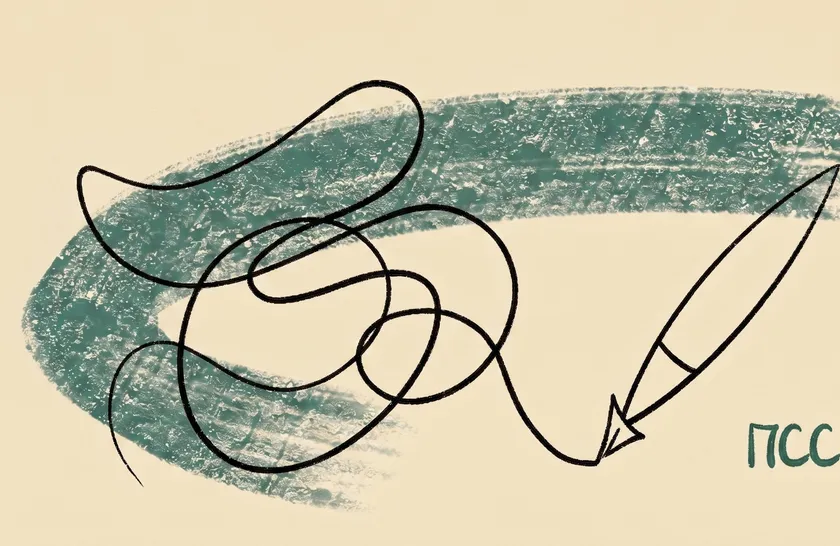
Winnicott's Squiggle Game
Most people would probably agree that a child’s main activity is play. Through play, a child comes to know the world, builds relationships with others, and develops. Play is also what sustains a child’s fantasy and imagination. In the analyst’s room, a child likewise “just” plays and narrates their own actions, while the analyst tries to follow their behavior and emotional state, putting into words what the child is showing them.
A child analyst’s room is furnished in a particular way. During a session, a child can look at and pick up any object in the room, but can’t take it home. Usually there are animal figures, dolls, toy cars, trains, blocks, pencils, paints, modeling clay, blank paper, picture books, and so on. Melanie Klein observed that toys “are not only things the child is interested in for their own sake — in the child’s play with them, they also always carry a wealth of symbolic meaning… This archaic mode of expression is the same language we know from dreams, and by approaching a child’s play in a way analogous to Freud’s interpretation of dreams, I found I could gain access to the child’s unconscious.”
The renowned pediatrician and psychoanalyst Donald Woods Winnicott saw children from the moment of their birth. His writings describe, in detail, sessions with children who were only a few months old. His extraordinary sensitivity and insight let him work near-miracles in just a few sessions.
In 1971, Winnicott devised and described in his papers a unique method he called the “squiggle game,” used in his first meetings with children. It’s a kind of game the analyst plays together with the child: on a blank sheet of paper, each person takes turns drawing a chaotic line — a squiggle — which the other then completes into something recognizable. What follows is the free association of whoever finished the drawing, and the analyst’s interpretation. Almost every child happily accepts the invitation to play. A child’s drawings become a spontaneous response that can shed light on the pressing issues they can’t yet put into words. The game not only builds a trusting relationship with the child but also helps uncover hidden conflicts and the source of the child’s distress. In one of his papers, Winnicott describes his work with Jill and with Patrick, and how the squiggle technique helped him move the therapeutic process forward with each of them.
The technique has since been picked up by specialists from other fields, working with their own patients.