
Interpreting a Child's Drawing in Psychoanalysis
From the earliest age, children are drawn to pens, pencils, markers, and paints — anything that lets them “leave a mark” on paper or any other surface. Over time, their drawings grow more defined and deliberate, turning from chaotic scratches into images that carry meaning.
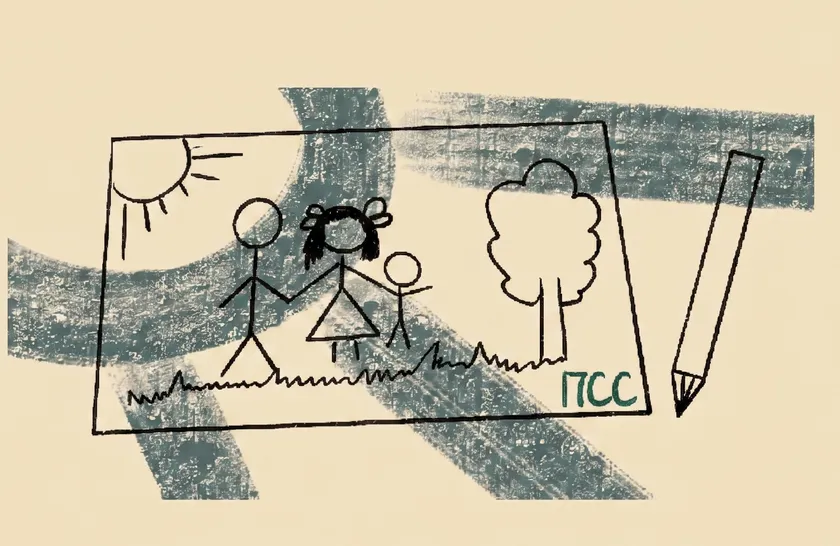
In sessions with an analyst, children don’t only play with the toys on offer or look through picture books — they draw. Sometimes a child draws a picture at home and brings it to the session. As the renowned child analyst Françoise Dolto put it, “a child tells itself through drawing.” She believed that “when a child draws, they are always drawing their own portrait; if that weren’t so, they wouldn’t be drawing at all. We don’t draw things — we draw ourselves, and see ourselves selectively in some part of the drawing.”
Unlike psychologists, who use drawings for diagnosis, an analyst never interprets a drawing on their own — they only ask the child: “What did you draw?”, “And where are you in the picture?” — giving the child a chance to talk about themselves, and gathering the material the young subject offers up. Dolto notes that “when a child places themselves somewhere in the drawing, they enter into an exchange with some other. That’s precisely what it means to make the drawing speak, rather than simply commenting on its content.” What matters isn’t some symbol or element on the page, but the words the child uses to describe their creation, and the meaning they bring to it.