
You or Your Reflection?
Do you remember the first time you saw yourself in a mirror? What did you think when you saw your own reflection?
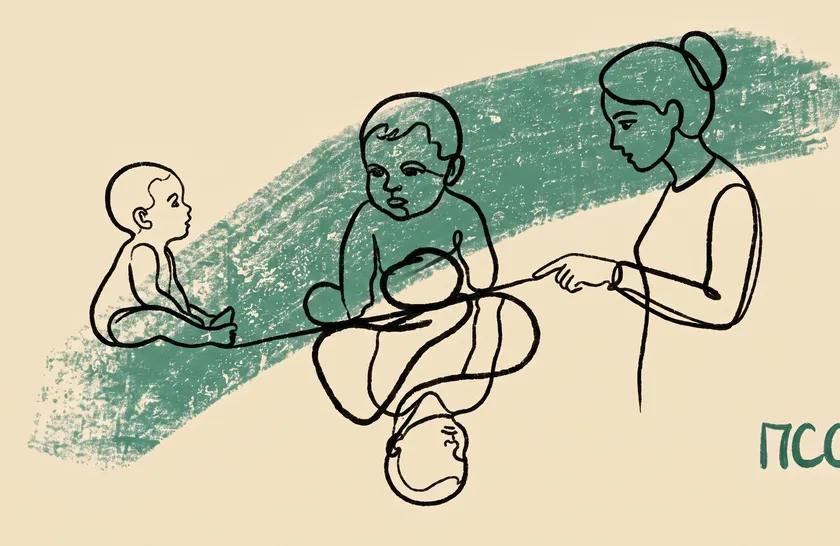
The French psychoanalyst Françoise Dolto paid particular attention to this moment. She argued that the first time a child sees their own reflection in a mirror, they’re more likely to think it’s another child rather than themselves. And indeed, if you watch a child in this moment, you can see them show interest in this “other” child, studying it closely, reaching out toward it, or trying to grab a toy that’s already in their own hand.
In her work, Dolto writes that it matters enormously how the adult standing beside the child talks about what’s happening. It’s better not to say to the child, “Look, that’s you.” It’s more accurate to say: “You see — that’s your reflection in the mirror, just like my reflection next to it, which you can also see.” At this moment, thanks to the mirror reflection, the child discovers that they and the adult are different heights, have different eye and hair color, and so on. The person standing beside them can help the child “register the differences between their own image and the adult’s image.” After this kind of “introduction” to their own reflection, the child begins to form a picture of what they look like — how they differ in appearance from an adult, how long their arms and legs are, what their face and hair look like. This is one of the important milestones on the path of psychic development.