
Why Psychoanalysis, and Not…?
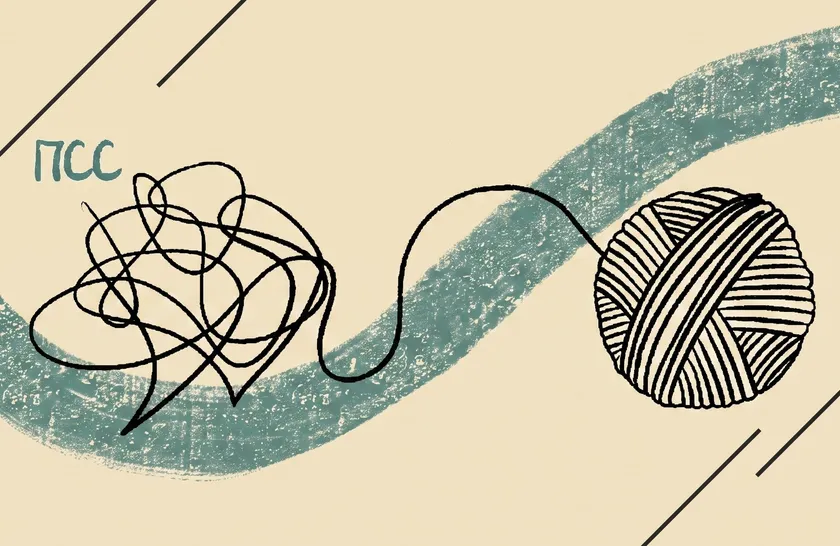
Everyone knows psychoanalysis works with the human psyche — letting a person explore their deepest experiences, untangle knots of ambivalent feeling, and open onto the world of the unconscious.
Since Freud, we’ve known that most of psychical life is unconscious, and that it can express itself through symptoms that cause real distress. Anyone who turns to an analyst hopes to improve their life, to understand it better, to be free of one difficulty or another. An analyst works with the symptom by trying to recognize what it means for this specific person — this subject — who has come into therapy. What matters enormously is exactly how a person talks about their symptom, its manifestations, and its shifts over time.
Other fields tend toward objectification — grouping people together by the symptoms that bring them to a specialist. And indeed, for almost any problem, you can find some solution or “instruction” that will suppress the symptom (anxiety, insomnia, depression, and so on). But unfortunately, its cause “stays off camera,” and may well make itself known again before long.
Psychoanalysis is hard to describe as an “operational” method. In the analyst’s room, an entirely different approach holds, a different ethic. As Antonino Ferro writes, “…the oscillation between models of listening can foster a volumetric, multidimensional view — opening up the depth of a story’s content, of the inner world, of relationships, of the emotional field, and of the patient’s path through these possible worlds.”
Psychoanalysis is always a relationship between two people, each with their own subjective experience. No two sessions are alike. And a great deal depends on how that relationship is built. “Everything the patient brings ‘today’ must be grasped, transformed, given meaning, with the patient’s own active participation.” Through evenly suspended attention, the analyst manages to catch the sense underneath the speech, the words that appear and link into chains of association during the session. Nothing is left unattended. In other words, a “structuring of the here-and-now” takes place, and these images come to live “in the Inner World and in History, giving rise to ‘memories of new experience,’ in which the specificity of our psychical life resides.”
Having gone through their own analysis, a person can later draw on the experience lived with their analyst on their own, becoming aware of their unconscious drives. Once you’ve come to know yourself, it becomes easier to know other people, and the world around you.