
Freud's Typical Dreams
Everyone dreams during sleep. Some people dream constantly, others rarely, and some insist they never dream at all — or forget everything the moment they open their eyes.
In his foundational work “The Interpretation of Dreams,” Sigmund Freud notes that “a dream is the dreamer’s own creation; it is not imposed on them from outside and has no foreign source.” Like many of his other ideas, this one was groundbreaking for its time. Since antiquity, what appeared in a dream had been treated as a symbol carrying some fixed meaning, and people believed dreams could help them foresee the future. In Freud’s own time, there were plenty who thought dreams deserved no significance at all.
Analysts today still draw on the concepts Freud put forward, using them to help their analysands better understand their inner world.
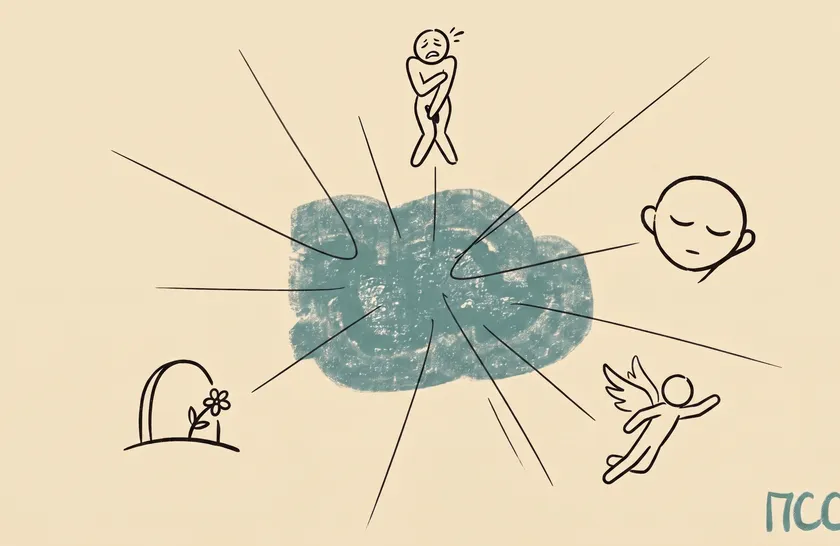
In this piece, I’d like to lay out the classification of “typical dreams” — dreams common to virtually everyone — that Freud gives in “The Interpretation of Dreams”:
- dreams of nakedness (when “the dreamer, naked or poorly dressed, walks about in front of others… and at the same time feels shame and embarrassment, wanting to flee or hide, yet also experiencing a peculiar sense of being rooted to the spot — unable to move or change the unpleasant situation”),
- dreams of the death of a loved one (“during which grief and loss can produce real, burning tears in sleep itself”),
- exam dreams (“as though one has failed an exam, been held back a year, and so on…”),
- dreams of missing a train,
- dreams involving toothache,
- dreams in which the dreamer flies, floats in the air, or falls, and the like.
Since “The Interpretation of Dreams” runs to over 700 pages, Freud was later asked to write a short summary of the book — so anyone curious about dreams can start with his shorter piece “On Dreams” before taking on “The Interpretation of Dreams” itself.