
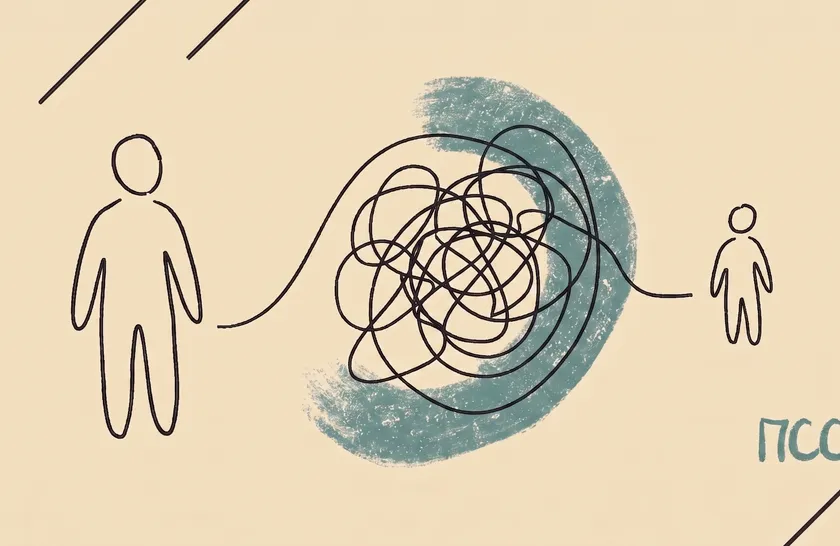
The Effort to Drive the Other Person Crazy
Interpersonal interaction is a vital part of every human life from birth onward. From the moment they appear, a child is immersed in their surroundings and comes into direct contact with the people around them. Their future depends a great deal on how their relationships with the people who matter most to them take shape, and what kind of emotional response they receive from those people.
In 1959, in his paper “The Effort to Drive the Other Person Crazy,” the American psychoanalyst Harold Searles described his clinical observations of how pathogenic interactions and relationships can influence a person’s capacity to lose their mind. He doesn’t reduce this possibility to any single cause, but he does give it special attention, noting that these efforts are unconscious, and lays out the ways one person can try to drive another crazy.
In a talk of his, Valdimiro Pellicanò presented this list as follows:
- When one party in a relationship activates parts of the other’s personality that are in conflict with one another, producing an emotional clash.
- When, within the interpersonal exchange between mother and child, “stimulation and frustration occur simultaneously, or alternate rapidly — the demand to recognize certain capacities can then have destructive consequences.”
- When the interaction with the other person happens on two or more levels that are independent of one another.
- When there’s a sharp shift from one emotional register to another, entirely incompatible with the one before, and this happens often enough.
- When an unexpected shift occurs in the conversation without a matching shift in emotional content — one that can have a destructive effect on the other person’s psychological functioning.
In each of these cases, what gets undermined is trust — trust in the reliability of one’s own emotional reactions, and in one’s own perception of external reality — and this is precisely what can lead toward madness.